There is a profound shift happening in high-end interior design. Luxury is no longer measured solely by the opulence of a fabric or the rarity of a finish. Instead, it is measured by how a space makes us feel, how it connects us to the earth, and how it fosters our overall wellbeing.
To explore this beautiful intersection of high aesthetic value and environmental mindfulness, we are launching our new series, Dwelling Well. In this series, we sit down with designers who look past temporary trends to create spaces that honor both visual elegance and the planet.
For our inaugural feature, we spoke with Susan Hayward and Jillian Hayward Schaible of Hayward Design House. Partnering with Kravet, Susan and Jillian have created a series of concept boards designed to illustrate how completely different products, textures, and materials can harmoniously work together. Rather than serving as a formal design framework, these boards are a creative exercise in synergy that shows the endless possibilities of pairing.
Through this collaborative lens, Susan and Jillian are redefining what it means to bring the outdoors in, moving far beyond the cliché of adding a few plants to create spaces that are deeply immersive, restorative, and alive.
Moving Beyond Botanicals: A New Definition of Biophilic Design
When many people hear the term biophilic design, they picture a room filled with potted greenery. For Hayward Design House, the concept goes infinitely deeper. It is about texture, movement, and the inherent flaws found in the natural world.
“Biophilic design isn’t about adding plants; it’s about how materials behave in a space.”
“With Kravet, we lean into natural fiber textiles, like linen, wool, and silk blends, and wallcoverings like grasscloths and refined textures that carry inherent variation,” Susan and Jillian explain. “It’s the irregularity of a weave, the panel shifts in grasscloth, and the way a surface catches and reflects light throughout the day.”
Instead of literal, heavy-handed botanical prints, the duo gravitates toward Kravet’s strié, mineral, and layered patterns. These designs subtly reference erosion, sediment, and natural movement. “The result is a space that feels dynamic and sensory. These are materials that shift with light, invite touch, and create depth, so the environment feels lived-in and alive, not just decorated.”
1. Living Canopy: Creating the Immersive Environment
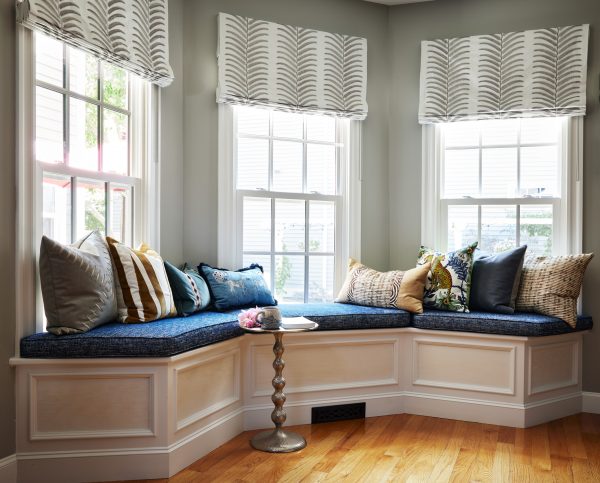
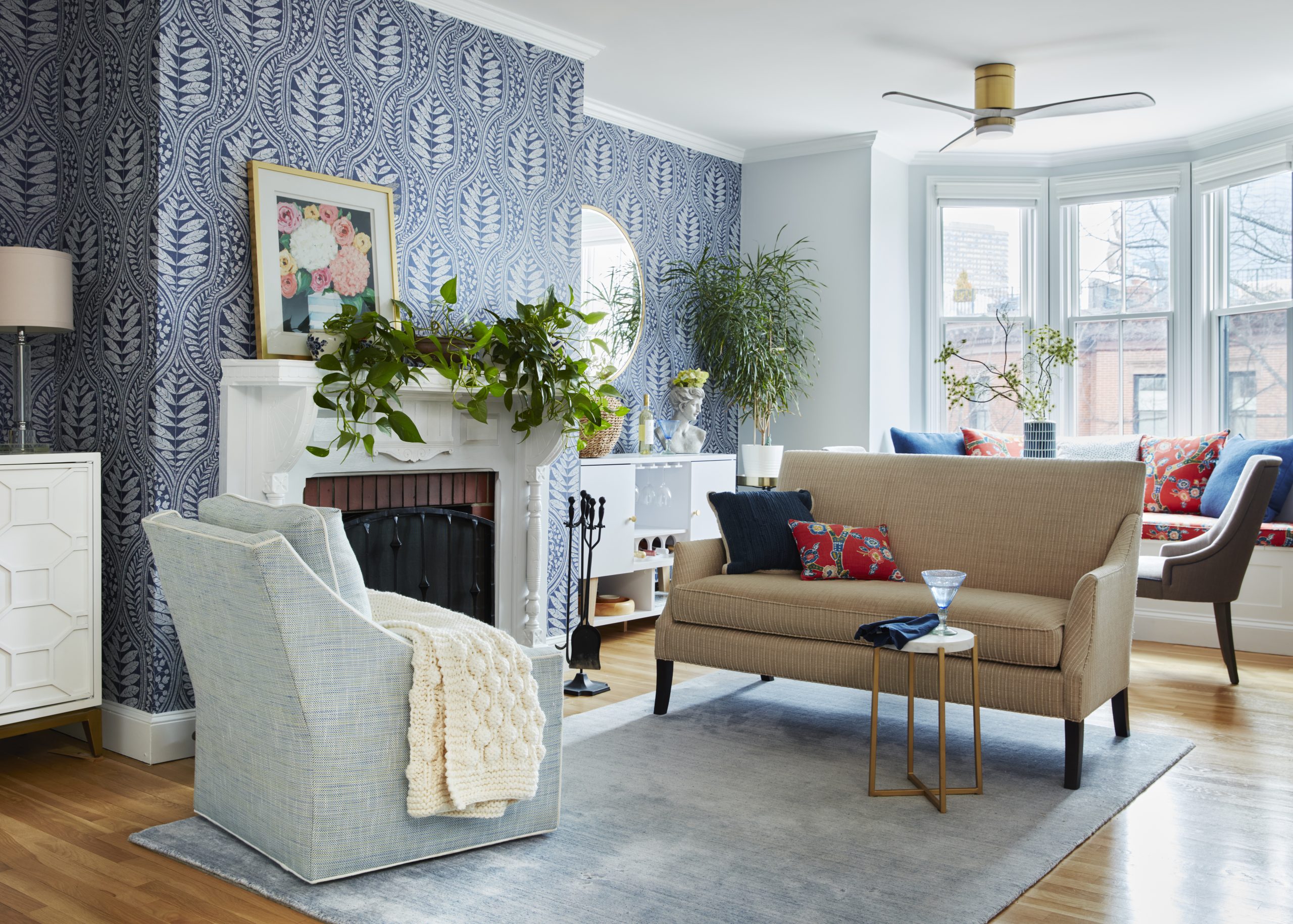
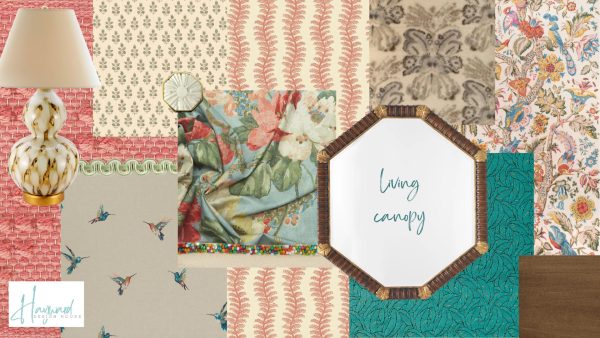
One of their standout design schemes, Living Canopy, aims to replicate the comforting, enveloping feeling of looking up into a forest ceiling. To achieve this without making a room feel overcrowded, Susan and Jillian masterfully manipulate scale and pattern repetition.
“With Living Canopy, immersion comes from how pattern is scaled and repeated across the entire envelope of the room,” they note. “We use larger-scale repeats, often vertical or organic in movement, to draw the eye upward, mimicking the experience of looking into a canopy rather than at a wall.”
Instead of confining a bold pattern to a singular feature wall, they allow the design to flow continuously across multiple surfaces, including the walls, drapery, and even upholstery.
“Repetition is intentional but not rigid. We layer patterns with slight variation in scale or texture so the eye keeps moving, similar to how light filters through leaves. The goal is to dissolve the edges of the room, so it doesn’t read as decorated walls, but as a fully immersive environment.”
2. Elemental Ground: Balancing Permanence and Comfort
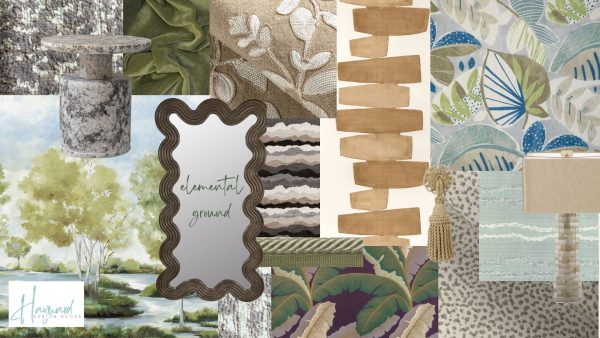
In stark contrast to the airy heights of the canopy, the Elemental Ground scheme focuses on geology, mineral tones, and a sense of absolute stability. However, designing a restorative space around stone-inspired textures requires a delicate balancing act to ensure the room does not feel cold or austere.
“Elemental Ground is about creating a sense of stability without feeling austere,” say Susan and Jillian. “We start with the grounded layer, using Kravet wallcoverings and textiles that reference stone, clay, and mineral striations to bring in that sense of permanence and quiet strength. But those surfaces are rarely left alone.”
To inject the softness required for interior comfort, the designers immediately introduce tactile contrast. They layer these rigid, mineral patterns with:
- Plush, touchable upholstery weaves
- Deeply textured fabrics like bouclé and brushed linens
- A warmer tonal palette to keep the space inviting
“Lighting also plays a role, allowing those mineral textures to read more dimensional and less rigid as the day shifts. The balance is intentional: grounding the space visually, while ensuring everything the body interacts with feels soft, calming, and restorative.”pace visually, while ensuring everything the body interacts with feels soft, calming, and restorative.”
The Geography of Design: Navigating Transitions and Stress Reduction
A truly cohesive home requires a narrative that flows naturally from one room to the next. When transitioning a project from the grounded, heavy textures of Elemental Ground to the weightless, sun-drenched feel of Filtered Light, Hayward Design House views the transition as a gentle landscape gradation.
“The transition is never abrupt; it’s more of a gradual shift,” they explain. “We usually start with a consistent undertone pulled from Elemental Ground, then slowly lighten and soften that same color as we move into Canopy. It’s not about introducing something new—it’s about letting the palette feel lighter, brighter, and more open.”
Using Kravet’s extensive range, they can maintain the same family of materials while subtly adjusting weight, opacity, and finish. This allows them to turn a nubby, mineral-textured linen in a living room into a fine, sheer drapery in a sunroom.
Public vs. Private: Designing for the Mind
Because biophilic design is scientifically proven to reduce stress, Susan and Jillian strategically apply their schemes based on how a space is utilized:
| Environment | Prioritized Scheme | Why It Works |
| High-Traffic Commercial Lobby | Elemental Ground | Ground brings weight, durability, and a calming visual anchor through high-performance textiles, creating a sense of movement and visual interest without feeling chaotic. |
| Private Bedroom | Living Canopy | Canopy provides a sense of safe enclosure and acoustic comfort through layered textiles, creating a calm, supportive environment that feels held within the space. |
The Future of Design: Wind + Time
This approach aligns seamlessly with the Slow Design movement, which prioritizes authentic, earth-derived materials that age beautifully rather than chasing fleeting trends. Susan and Jillian are always looking toward the next evolution of their environmental narrative.
When asked what natural element they want to translate next for a future project, their answer is beautifully poetic: Wind + Time.
“A study in erosion, patina, and quiet transformation,” they envision. “Think sun-faded textiles, chalky finishes, softened strié patterns, and surfaces that feel worn in rather than applied. Through Kravet, this could come to life in washed linens, distressed velvets, and wallcoverings with subtle movement where nothing is static and everything is gently evolving.”
Using a muted, atmospheric palette of sand, ash, mineral whites, and faded indigo, the Wind + Time concept promises to move away from mere visual impact, focusing instead on pure emotional resonance to create spaces that feel settled, softened, and inherently calm.
Through their thoughtful, texture-first approach, Susan and Jillian prove exactly what our Dwelling Well series aims to highlight: when we design with the wellbeing of the environment and the human spirit in mind, we create spaces that are timeless, restorative, and profoundly beautiful.